Weekly Torah Portion Naso
The portion Naso asks what we must return, admit and set right today: from restoring broken trust to the Nazirite's boundaries, holiness…
The portion Naso asks what we must return, admit and set right today: from restoring broken trust to the Nazirite's boundaries, holiness…
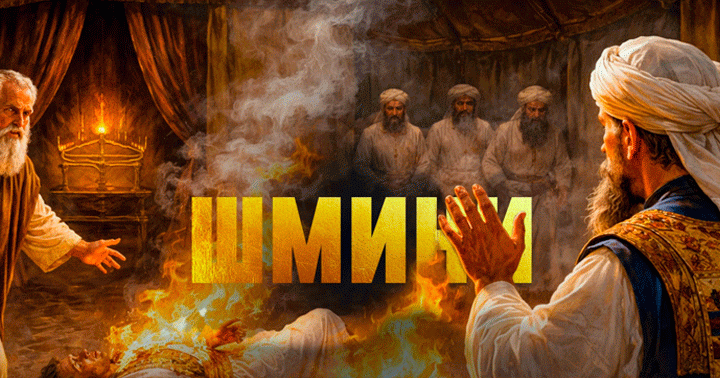
Why the first section of Shemini may be read up to eight times, what the number eight means, the tragedy of Aaron’s…
The story of Cain and Abel is not a fairy tale about good and evil but a model of human psychology: a…
Moshe sends out the spies so that they will see that those they fear so much fear them even more. The real…
In parashat Naso the Torah emphasizes that the owner of the harvest himself decides to whom he gives terumah and the tithe.…
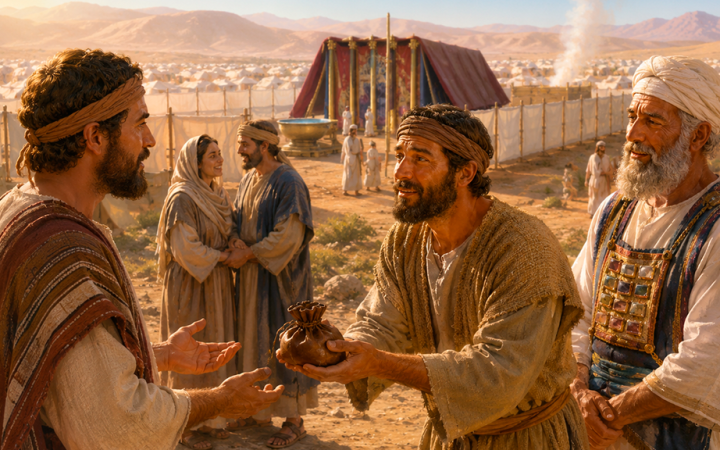
Moshe, whom God trusted without reservation, still gave the people a public account of every coin spent on the Mishkan — and…
At the beginning of Devarim, Moshe reminds the people of their mistakes not directly but by hints — through the names of…
Последние главы книги Ваикра — «Беар» и «Бехукотай» — на первый взгляд кажутся посвящёнными старинным законам земли и святыни: тут речь идёт…
Глава «Цав» — вторая в книге Ваикра — с первого взгляда продолжает техническое описание жертвоприношений, начатое в предыдущей главе. Но при более…
Глубинная идея книги Ваикра – это не только жертвоприношения, как ритуальные действия прошлого, но способ пробудить в человеке осознанное стремление к приближению…
«Вот исчисления Мишкана» (Шмот 38:21).Так начинается последняя глава книги «Шмот» — заключительная нота грандиозной симфонии строительства Мишкана, передвижного Храма в пустыне, где…
Недельная глава Пкудей завершает книгу Шмот. И завершает её не драматически, а тихо, скрупулёзно — с отчётом: сколько золота было собрано, сколько…